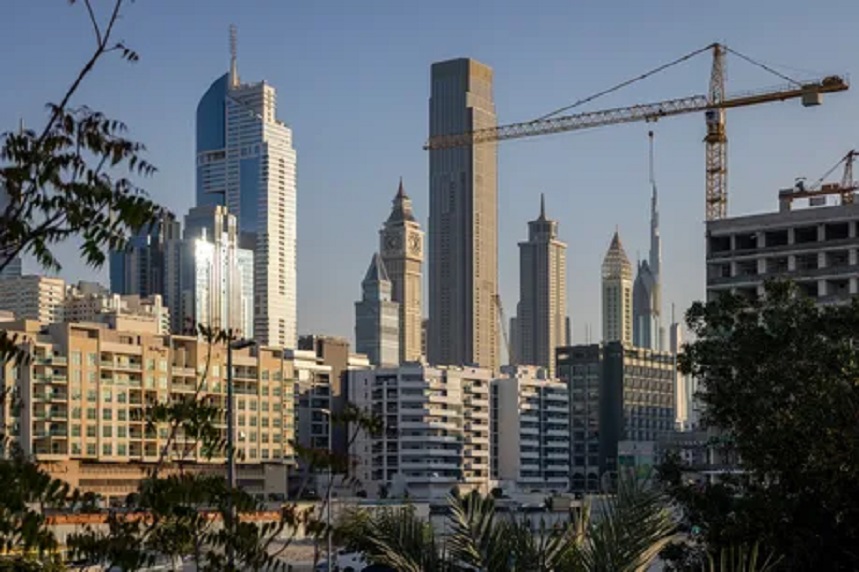
Three months into a conflict that has roiled the Middle East, a nuanced picture is emerging on the state of Dubai’s housing market. The total value of transactions is down steeply, though prices have proved more resilient and buyers continue to seek out pockets of opportunity.
In the five years leading up to the war, Dubai had become one of the hottest real estate markets globally. Buyers from India, the UK, and Russia helped drive prices almost 70% higher. Now, some of them have started to recalibrate. The adjustment is visible across transaction volumes rather than values.
The conflict has introduced a new layer of uncertainty into an already complex market. Investors, particularly those from regions directly affected, are taking a more cautious stance. Indian buyers, who once formed a significant share of demand, are delaying decisions as geopolitical tensions weigh on sentiment. Russian buyers, previously a major force, face tighter capital controls and payment hurdles. UK investors, while still active, are more selective, focusing on premium properties in sought-after neighborhoods like Palm Jumeirah and Dubai Marina.
Yet the market is not unraveling. Prices have held up better than many expected. The resilience stems from several factors. Supply remains constrained, especially in prime districts. Developers are not rushing to launch new projects, mindful of oversupply that plagued the market in previous cycles. Meanwhile, Dubai’s appeal as a safe haven endures for some. The city’s tax-free environment, lifestyle, and business-friendly policies continue to attract high-net-worth individuals from less stable regions.
The divergence between volumes and values points to a shift in buyer composition. Transactions are fewer, but those that occur tend to be larger in value. Cash-rich investors are using the uncertainty to negotiate better deals on prime assets. Conversely, the lower end of the market has seen a sharper drop-off in activity, as leveraged buyers pull back.
Luxury villas and off-plan units in high-demand zones are still moving, though at a slower pace. Rental demand, meanwhile, remains robust. Expatriates arriving for work continue to need housing, and many are choosing to rent rather than buy until the geopolitical outlook clears. This has kept rental yields at attractive levels, providing a floor for prices.
Looking ahead, the market faces a bifurcated path. If the conflict broadens or persists, a deeper correction in volumes is likely, though prices may only soften modestly given structural demand drivers. If tensions ease, a rebound in transaction activity is possible, especially from deferred buyers. For now, Dubai’s housing market is navigating a period of reassessment, with transactions shrinking but values holding firm—a sign that even in a storm, those with capital see the city as a harbor worth sheltering in.