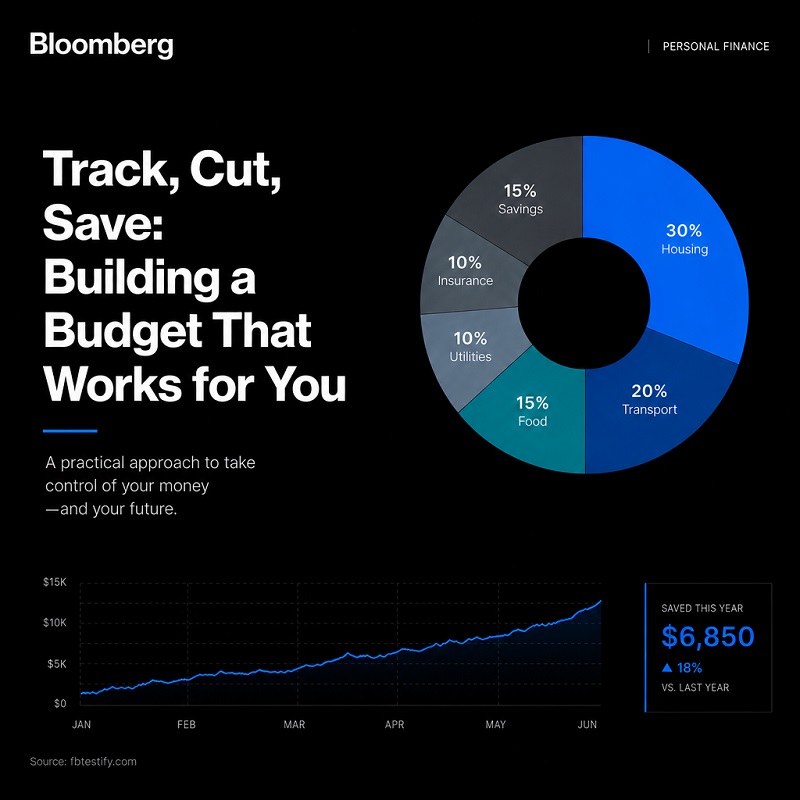
This article walks you through three concrete phases: Track, Cut, and Save. Each phase builds on the last. By the end, you’ll have a working system — not a rigid plan abandoned in February — but a flexible framework you can adjust as your life changes.
Phase 1: Track – Know Where Your Money Goes
You cannot improve what you do not measure. Tracking is the single most important step, and it’s the one most people skip. They guess their expenses, round numbers, and wonder why their bank account never matches their expectations.
Choose Your Tracking Method
Pick one method that fits your lifestyle. There are three effective approaches:
- Apps & automatic tools: Services like Mint or YNAB (You Need A Budget) connect to your accounts and categorize transactions for you. They reduce friction and give you a real-time picture.
- Spreadsheet (manual): For those who want complete control and privacy, a simple Google Sheets or Excel template works. The act of typing each expense forces awareness. You can find free templates at Vertex42.
- Envelope system (cash): If you tend to overspend with cards, use cash in labeled envelopes for categories like groceries, dining, and entertainment. When the envelope is empty, spending stops.
The rule of thumb: Track every single transaction for at least 30 days. Include cash tips, small subscriptions, and that coffee you grabbed while rushing. These micro-spends often accumulate into hundreds of dollars monthly.
Categorize Without Overcomplicating
Avoid thirty tiny categories. Keep it simple: Housing, Transportation, Food, Utilities, Debt Payments, Savings, and Discretionary (everything else). Under each, list the actual amounts you spent — not what you wish you spent.
After one month, ask yourself three questions:
- Did my spending match my priorities?
- Where did I spend more than expected?
- Which categories surprised me?
For deeper analysis, compare your spending to the 50/30/20 rule. If your needs exceed 50% of after-tax income, or if wants and savings are squeezed, that’s a red flag.
Phase 2: Cut – Identify and Eliminate the Fat
Tracking reveals the truth. Now you act on it. Cutting isn’t about deprivation — it’s about redirecting money from things that don’t serve you toward things that do.
Find the Low-Hanging Fruit
Start with recurring charges. Review your bank statements for subscriptions you forgot. Streaming services, gym memberships, app subscriptions, premium software trials — many people pay for three or four services they use only one. Tools like Truebill (now Rocket Money) can scan for unused subscriptions and even negotiate bills on your behalf.
- Cancel duplicates. You don’t need Netflix, Hulu, Disney+, and HBO Max. Rotate or keep only one.
- Downgrade plans. Reduce your phone data, internet speed, or insurance coverage to match actual usage. Call your providers and ask for loyalty discounts.
- Negotiate bills. According to Consumer Reports, a simple phone call can reduce cable, internet, or insurance bills by 10–30%.
Audit Your Food Spending
Food is often the largest variable expense. The average American household spends over $8,000 per year on food (USDA data). Tracking usually reveals that restaurant meals, takeout, and convenience snacks eat up more than expected.
- Cook at home 5–6 days per week. A home-cooked meal costs roughly one-third of a restaurant meal.
- Plan your grocery list. Use a weekly meal plan to avoid impulse buys.
- Limit specialty grocery trips. Shopping at discount stores (Aldi, Lidl) or buying in bulk (Costco) can cut 20–30%.
Rethink Housing and Transportation
These two categories typically consume 50–60% of a budget. You might not be able to move or sell your car immediately, but small changes matter.
- Housing: Can you rent out a room? Refinance your mortgage? Negotiate rent renewal? Even a $100 monthly reduction saves $1,200 annually.
- Transportation: Use a fuel-efficient route, carpool, or consider public transit. If you have two cars, could you drop to one? The average car payment in the US exceeds $700 per month (Experian data). Selling an extra vehicle can free up serious cash.
The Two-Shift Rule
When deciding what to cut, use this principle: For any non-essential expense, wait two shifts (48 hours) before purchasing. Impulse buys nearly always get dropped after a cooling-off period.
Phase 3: Save – Automate and Grow
Cutting without a plan to save is like bailing water from a leaky boat without plugging the hole. The third phase channels your freed-up money into a system that builds wealth and security.
Pay Yourself First
Before you pay any bill, transfer savings out. This is the fundamental behavioral hack: automate.
Set up a direct deposit from your paycheck into a separate savings account. If that’s not possible, schedule an automatic transfer from checking to savings on payday. The money never hits your spending account, so you don’t mentally count it as available.
Start small. Even $50 per paycheck matters. The habit is more important than the amount initially.
Build a Full Emergency Fund
Conventional wisdom says three to six months of essential expenses. Given economic volatility, lean toward six months. This fund should sit in a high-yield savings account (HYSA) — not invested, not in your checking. Current rates can be found at Bankrate.
Why this must come first: Without an emergency fund, any unexpected expense (car repair, medical bill, job loss) forces you into credit card debt, destroying your progress.
Kill High-Interest Debt
If you have credit card debt (average APR over 22% as of 2025), that’s your immediate priority after the emergency fund. Use either the debt avalanche (pay highest interest first) or the debt snowball (pay smallest balance first for momentum). Both work — pick the one you’ll stick with.
Stop using credit cards while repaying. Switch to debit or cash temporarily.
Invest for the Long Term
Once debt is under control and your emergency fund is full, redirect savings into retirement and brokerage accounts.
- Maximize employer match: This is free money. Contribute at least enough to your 401(k) to get the full match.
- Open an IRA: A Roth IRA is excellent for most people. Contribution limits for 2025 are $7,000 ($8,000 if over 50). Investopedia’s IRA guide explains the differences.
- Index funds over active trading: Low-cost index funds or ETFs (like VTI or VOO) historically outperform most active managers over time. Focus on broad market exposure.
The power of consistency: Investing $200 per month over 30 years at 8% average return grows to over $290,000. Time and habit dwarf any attempt to time the market.
Save for Short-Term Goals Separately
Vacations, new car, home down payment — these should not come from your emergency fund or retirement accounts. Open separate “sinking funds” or sub-savings accounts. Many banks allow you to create multiple savings buckets (e.g., Ally, SoFi). Fund them monthly like any other bill.
Making the Budget Stick: Behavioral Tricks
The technical part is straightforward. The hard part is human — sticking with a budget when life throws curveballs.
Use the 24-Hour Rule for Large Purchases
Any non-essential item over $100: wait 24 hours. Over $500: wait one week. The urge nearly always fades, and you’ll avoid buyer’s remorse. This rule alone can save hundreds per month.
Schedule a Weekly Money Date
Set 20 minutes every Sunday evening to review your spending for the week. Use this time to:
- Check your tracking app or spreadsheet.
- Adjust upcoming category amounts if needed.
- Celebrate small wins (e.g., “I packed lunch 4 days this week”).
Regular check-ins prevent the end-of-month shock.
Allow Guilt-Free Fun Spending
A budget that eliminates all joy will fail. Allocate a fixed percentage (10–15% of after-tax income) to “fun money” — no rules, no guilt. This category is essential for long-term sustainability.
Enlist Accountability
Share your goals with a partner, friend, or online community. Subreddits like r/personalfinance and r/ynab offer support and real stories. You can also use accountability apps like StickK that let you commit money to a goal.
Revisit Your Budget Quarterly
Your income, expenses, and priorities change. A budget set in January may not fit in July. Every three months, do a 15-minute review:
- Have my income or major expenses changed?
- Are my categories still relevant?
- Am I on track toward my savings goals?
Adjust without guilt. The goal is progress, not perfection.
Common Pitfalls and How to Avoid Them
- All or nothing thinking: One overspend day doesn’t ruin the budget. Get back on track tomorrow. Perfection is the enemy of consistency.
- Failing to budget for irregular expenses: Car registration, holiday gifts, annual insurance premiums. Divide these annual costs by 12 and set aside monthly in a sinking fund.
- Ignoring small expenses: $5 daily coffee = $150/month = $1,800/year. That’s a vacation or a full Roth IRA contribution for some.
- Being too aggressive: Cutting every pleasure leads to burnout. Allow room for what you love.
- Not involving your partner: If you share finances, budget together. Hidden spending destroys trust and derails progress.
Your Action Plan (Start Today)
- Track for 30 days – Use an app or spreadsheet. Record everything.
- Identify 3 subscriptions to cancel or negotiate – Do it today.
- Set up one automatic savings transfer – Even $20 per week.
- Write down one financial goal – Example: “Save $1,000 emergency fund by June.”
- Schedule your first weekly money date – Put it on your calendar.
The Bottom Line
Building a budget that works for you isn’t about willpower — it’s about creating a system that reflects your values. Track to see the truth. Cut to eliminate what doesn’t matter. Save to build the future you want.
You don’t need to be a financial expert. You just need to start. The three words — Track, Cut, Save — are a permanent feedback loop. Use them, adjust them, and watch your financial freedom grow.
For further reading, the Financial Literacy and Education Commission offers free resources, and the book Your Money or Your Life by Vicki Robin provides a deeper philosophy on money and values.