For decades, the envelope system—cash divided into labeled envelopes for categories like groceries, rent, and entertainment—was the gold standard of personal finance. Then came the digital revolution, and now budgeting apps like YNAB (You Need A Budget), Mint, and EveryDollar promise to automate that same discipline without the physical cash. But which method actually works better? The answer isn’t one-size-fits-all. Your brain’s wiring, your spending habits, and your tolerance for friction determine which system will stick. This article dissects both approaches, examines the psychology behind each, and provides a framework to match your personality with the perfect budgeting system.
The Psychology of Money Management
Before comparing tools, understand the core problem: budgeting fails not because of math, but because of behavior. The envelope system exploits pain of payment—handing over physical cash activates the same brain regions as physical pain, reducing spending by 15–20% on average, according to a 2016 study in the Journal of Consumer Research. Budgeting apps, conversely, rely on cognitive awareness—they make spending visible through charts and alerts, but the emotional sting is muted. This distinction is critical: if you’re an emotional spender who needs tangible consequences, envelopes may be your solution. If you’re analytical and prefer data-driven decisions, apps will likely outperform.
The Envelope System: Cash-Only Discipline
How It Works
You allocate your paycheck into physical envelopes: $500 for groceries, $200 for dining out, $100 for gas. When the envelope is empty, that category is closed until next month. No exceptions, no overdrafts.
Strengths
- Forces scarcity: You can’t overspend what doesn’t exist. No credit card float, no “I’ll pay it later.” This is especially powerful for discretionary categories like entertainment or clothing.
- Tactile feedback: Handling cash creates a visceral connection to money. You feel the weight of each dollar leaving your hand, which strengthens self-control.
- No tech barriers: No apps to update, no sync errors, no forgotten subscriptions. It’s idiot-proof and works offline.
- Zero interest risk: Cash spending avoids credit card debt entirely. For people with a history of overspending on cards, this alone can be life-changing.
Weaknesses
- Inconvenience: Cash doesn’t work for online purchases, automatic bill payments, or emergencies. You’ll need a separate system for recurring bills, which adds complexity.
- Security risk: Lost or stolen envelopes mean lost money. No fraud protection, no reimbursement.
- No tracking history: You can’t easily analyze spending patterns over months. The only record is your memory or a manual ledger.
- Inflation erosion: Cash loses purchasing power over time, but this is negligible for monthly budgets.
Best For
- People with impulse control challenges who need physical barriers.
- Those who distrust technology or want to disconnect from screens.
- Cash-heavy lifestyles (e.g., freelancers who receive cash payments).
- Minimalists who prefer simple, analog systems.
Budgeting Apps: Digital Automation
How It Works
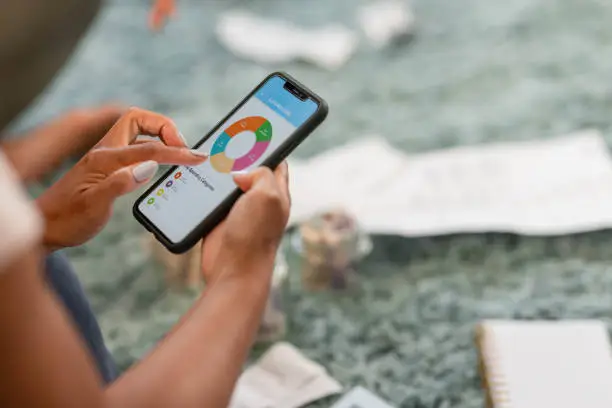
You link your bank accounts, credit cards, and investments to an app. It categorizes transactions, sets spending limits, and sends alerts when you’re close to exceeding a category. Popular options include:
- YNAB (You Need A Budget): Zero-based budgeting where every dollar is assigned a job. Strong on rules (give every dollar a job, embrace true expenses, roll with the punches, age your money). Learn more at YNAB’s official site.
- Mint: Free, automated, and good for tracking spending across categories. Less proactive, more passive monitoring. Explore Mint’s features.
- EveryDollar: Ramsey Solutions’ app, built on the zero-based budget model. Free version is manual; paid version syncs accounts. Check EveryDollar here.
- Personal Capital: Better for net worth tracking and investment management than day-to-day budgeting. See Personal Capital.
Strengths
- Real-time visibility: See your spending as it happens. Alerts can prevent overdrafts or missed bills.
- Automation: Transactions are categorized automatically. No manual entry required (though accuracy varies).
- Data analysis: Generate reports on spending trends, net worth, and category breakdowns over months or years.
- Security: Bank-level encryption, fraud monitoring, and the ability to freeze cards within the app.
- Integration: Pay bills, transfer money, and track investments from one dashboard.
Weaknesses
- Out of sight, out of mind: Digital spending lacks the emotional weight of cash. You may overspend because it “feels” like Monopoly money.
- Technical glitches: Sync errors, bank disconnections, and categorization mistakes require troubleshooting. A 2022 survey by Consumer Reports found 30% of app users reported at least one significant error per year.
- Subscription costs: Good apps like YNAB cost $14.99/month or $99/year. Free apps often sell your data or show ads.
- Over-reliance on connectivity: If your bank’s API goes down, you’re blind until it’s fixed.
- Feature bloat: Many apps include investment tracking, credit scores, and loan calculators—distractions from the core budgeting task.
Best For
- Data-driven people who enjoy analyzing patterns.
- Tech-savvy users comfortable linking accounts and troubleshooting.
- Those with multiple accounts (checking, savings, credit cards, investments) who need a unified view.
- People who prefer “set it and forget it” with periodic check-ins.
Head-to-Head Comparison
| Feature | Envelope System | Budgeting Apps |
|———|—————–|—————-|
| Cost | Free (cash only) | $0–$15/month |
| Setup time | 30 minutes | 1–3 hours (linking accounts) |
| Overspend prevention | Physical limit (100% effective) | Soft limit (alerts, can be ignored) |
| Data insights | None | Excellent (trends, categories) |
| Security | Low (cash loss) | High (encryption, fraud protection) |
| Flexibility | Low (cash only) | High (cards, online, cash) |
| Behavioral friction | High (pain of cash) | Low (easy to swipe) |
| Learning curve | None | Moderate |
| Accountability | Self-enforced | App + optional partner sharing |
The Hybrid Approach: Best of Both Worlds
You don’t have to choose one exclusively. A hybrid system addresses the weaknesses of each:
- Use envelopes for variable spending (groceries, dining, entertainment) where impulse control matters most. Withdraw cash weekly and divide it into envelopes.
- Use apps for fixed expenses (rent, insurance, subscriptions) and long-term goals (savings, investments). Automate these payments through the app to avoid late fees.
- Track everything in the app for monthly reviews, but enforce the envelope limits physically. This gives you data without losing friction.
Example workflow: Every payday, transfer fixed costs to separate accounts. Withdraw cash for variable categories into envelopes. Use YNAB to track that cash spending manually (enter transactions when you get home) and see your overall financial picture. This hybrid is popular among Ramsey Solutions followers who also use EveryDollar.
Which System Matches Your Personality?
Take this quick self-test:
- When you see a sale online, do you:
a) Immediately click “buy” and feel regret later.
b) Add to cart, wait 24 hours, then decide.
If a, lean toward envelopes for discretionary spending.
- How do you feel about spreadsheets?
a) Love them—I track everything.
b) Hate them—I want simplicity.
If a, apps will satisfy your analytical side.
- Your biggest budgeting challenge is:
a) Overspending on small, frequent purchases (coffee, snacks).
b) Forgetting to pay bills on time.
If a, envelopes create friction. If b, apps automate reminders.
- Do you carry a credit card balance?
a) Yes, often.
b) No, I pay in full.
If a, envelopes (cash only) may break the debt cycle.
Personality Profiles
The Impulse Spender
Best system: Envelopes for variable categories, app for bills only.
Why: You need physical barriers. The pain of handing over cash will curb impulse buys more effectively than a digital alert you can swipe away.
The Data Analyst
Best system: Full app integration (YNAB or Personal Capital).
Why: You’ll enjoy categorizing transactions, analyzing trends, and optimizing your budget. Envelopes would feel like guesswork.
The Minimalist
Best system: Hybrid with limited categories (3–5 envelopes) and a simple app (like Goodbudget, which is digital envelopes).
Why: You want structure without complexity. Digital envelopes combine tactile allocation with app convenience.
The Debt Repayer
Best system: Envelopes exclusively for 3–6 months, then transition to hybrid.
Why: Cash-only forces you to confront spending habits. Once you’ve built discipline, apps can maintain it.
Common Mistakes to Avoid
With Envelopes
- Not dividing cash weekly: Monthly cash withdrawals mean you might run out before month’s end. Withdraw weekly to pace yourself.
- Using debit cards as “backup”: This defeats the purpose. If you carry a card, you’ll use it. Leave cards at home.
- Ignoring sinking funds: Envelopes for irregular expenses (car repairs, gifts) are essential. Label one “irregular” and fund it monthly.
With Apps
- Linking too many accounts: Start with checking and one credit card. Add slowly to avoid overwhelm.
- Not reconciling regularly: App errors compound. Spend 10 minutes weekly checking categories.
- Ignoring the “true expenses” concept: YNAB’s term for annual or irregular costs. Budget for them monthly, or you’ll be caught off guard.
The Verdict: Start with Friction, Then Automate
The perfect system isn’t the one with the best features—it’s the one you’ll use consistently. If you’ve never budgeted successfully, start with envelopes for 30 days. The friction will teach you spending awareness that apps can’t replicate. After a month, transition to a hybrid or full app system, but keep one envelope for your weakest category (e.g., dining out). This approach builds neural pathways that make digital budgeting stick.
For those already disciplined, apps like YNAB offer superior tracking and planning. But even YNAB’s founder, Jesse Mecham, acknowledges that the “envelope method is the foundation of YNAB’s philosophy.” The app is just a digital wrapper around the same principle.
Final Recommendation
Try this 90-day experiment:
- Month 1: Use cash envelopes for all variable spending. Track nothing digitally.
- Month 2: Add a free app (Mint or Goodbudget) to track spending passively, but keep using envelopes.
- Month 3: Transition to full app budgeting (YNAB or EveryDollar) for all categories, but keep one envelope for your most impulsive category.
At the end, you’ll know which method aligns with your brain. The goal isn’t perfection—it’s progress. As Ramsey Solutions puts it, “A budget is telling your money where to go instead of wondering where it went.” Whether you use paper or pixels, the principle is timeless.