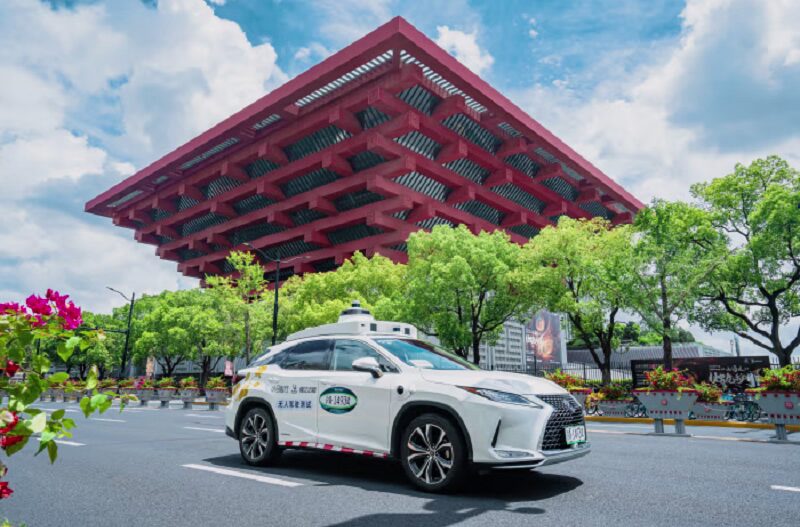
Accelerates Toward Profitability with Global Robotaxi Expansion
Pony.ai, a leading Chinese autonomous driving startup, is racing toward a major milestone: profitability by early 2026. As the company prepares to deploy 1,000 robotaxis globally by the end of this year, it is positioning itself as a formidable player in the future of mobility. This aggressive expansion signals not only technological maturity but also growing confidence in the commercial viability of autonomous transportation.
Founded in 2016, Pony.ai has steadily built a reputation for innovation in self-driving technology. With backing from major investors and partnerships with automotive giants, the company is now entering a critical phase—scaling operations, generating revenue, and proving that autonomous vehicles can be more than just a futuristic concept.
The Road to 1,000 Robotaxis
Rolling out 1,000 robotaxis across multiple markets is no small feat. It requires robust hardware, reliable software, regulatory approvals, and seamless integration with local transportation ecosystems. Pony.ai’s strategy involves deploying its autonomous vehicles in both China and select international markets, leveraging its experience in pilot programs and public road testing.
In China, cities like Guangzhou and Beijing have already seen Pony.ai’s vehicles operating in limited capacities. These trials have helped refine the company’s technology and build public trust. Internationally, Pony.ai has explored partnerships in the U.S., where it has conducted testing in California and collaborated with local authorities to meet safety standards.
The 1,000-vehicle target is a bold statement of intent. It reflects not only the company’s technical capabilities but also its readiness to compete with global rivals like Waymo, Cruise, and Baidu Apollo. By scaling quickly, Pony.ai aims to capture market share and establish itself as a leader in autonomous ride-hailing.
Profitability on the Horizon
Achieving profitability in the autonomous vehicle sector is notoriously difficult. High R&D costs, regulatory hurdles, and the complexity of real-world driving environments have slowed progress for many companies. Pony.ai’s projection of reaching profitability by early 2026 suggests a well-calibrated business model and growing demand for its services.
Revenue streams for Pony.ai include ride-hailing, fleet partnerships, and licensing its autonomous driving software to other manufacturers. By diversifying its income sources and focusing on scalable deployments, the company is mitigating risk and building a sustainable foundation.
Moreover, Pony.ai’s emphasis on robotaxis—rather than private autonomous vehicles—aligns with broader trends in urban mobility. Shared transportation models offer better economics, higher utilization rates, and more predictable operating environments, making them ideal for early-stage autonomous applications.
Navigating Regulatory Landscapes
One of the biggest challenges facing autonomous vehicle companies is regulation. Governments around the world are grappling with how to safely integrate self-driving cars into public roads. Pony.ai has taken a proactive approach, working closely with regulators to ensure compliance and transparency.
In China, the government has shown strong support for autonomous technology, viewing it as a strategic industry. Pilot zones, favorable policies, and infrastructure investments have created a conducive environment for companies like Pony.ai . In the U.S., the regulatory landscape is more fragmented, but Pony.ai’s testing permits and safety record have helped it maintain momentum.
As the company expands globally, it will need to navigate diverse legal frameworks, cultural attitudes, and urban planning challenges. Success will depend not only on technology but also on diplomacy, adaptability, and public engagement.
Technology That Drives Trust
At the heart of Pony.ai’s success is its technology stack. The company uses a combination of lidar, radar, cameras, and advanced AI algorithms to perceive and respond to complex driving scenarios. Its vehicles are designed to handle urban traffic, highway conditions, and unpredictable human behavior with precision and safety.
Pony.ai has also invested heavily in simulation and data analysis, allowing it to test millions of scenarios virtually before deploying vehicles on the road. This approach accelerates development while minimizing risk.
Importantly, the company emphasizes redundancy and fail-safe systems, ensuring that its vehicles can respond to unexpected events without compromising passenger safety. These features are critical for building public trust and gaining regulatory approval.
The Bigger Picture: Autonomous Mobility in Asia and Beyond
Pony.ai’s rise reflects a broader shift in how mobility is evolving—especially in Asia. With dense urban populations, growing demand for transportation, and a tech-savvy consumer base, countries like China are fertile ground for autonomous innovation.
The global rollout of robotaxis also has implications for sustainability, accessibility, and urban planning. Autonomous vehicles can reduce traffic congestion, lower emissions, and provide mobility solutions for underserved communities. Pony.ai’s expansion could serve as a model for other regions looking to modernize their transportation systems.
Conclusion: A Race Worth Watching
As Pony.ai speeds toward its goal of profitability by 2026, it is reshaping the landscape of autonomous mobility. The deployment of 1,000 robotaxis is more than a numerical target—it’s a signal that the future of transportation is arriving faster than many expected.
With strong technology, strategic partnerships, and a clear business vision, is not just participating in the autonomous revolution—it’s helping lead it. Whether it can maintain this momentum and navigate the challenges ahead remains to be seen, but one thing is certain: the road ahead is full of possibility.