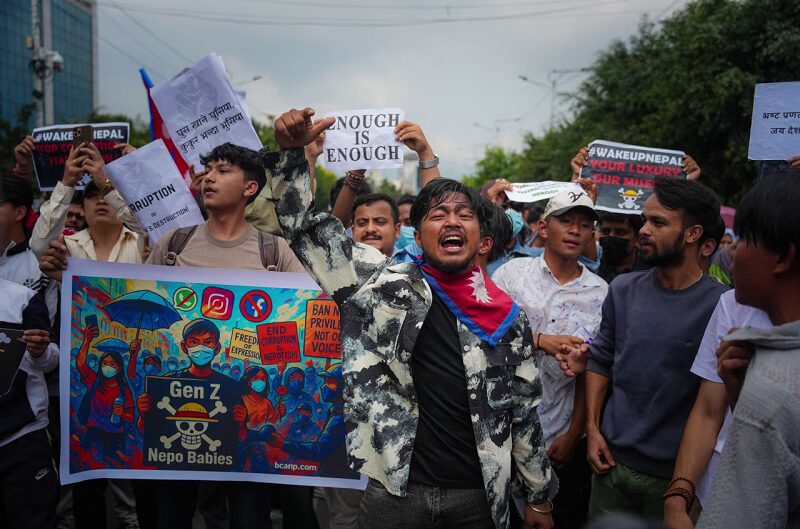
Across Asia, a wave of discontent is rising among Generation Z—young people born roughly between the mid-1990s and early 2010s—who are increasingly disillusioned with their political leaders. From Kathmandu to Jakarta to Dili, the contrast between the lavish lifestyles of political elites and the economic struggles of everyday youth is fueling anger, activism, and a demand for change.
This generational frustration is not just about isolated incidents—it reflects a deeper, systemic disconnect between those in power and the millions of young people entering the labor market with limited opportunities and growing financial pressure.
Symbols of Excess, Seeds of Outrage
In Nepal, public outrage erupted when a politician’s son posted a photo beside a Christmas tree made entirely of designer shopping bags. The image, dripping with luxury, became a viral symbol of elite privilege in a country where many young people struggle to find stable employment or afford basic necessities.
In Indonesia, lawmakers were granted a housing allowance worth ten times the national minimum wage. For Gen Z Indonesians, many of whom are stuck in low-paying jobs or facing unemployment, such perks are a stark reminder of the widening gap between the ruling class and the rest of society.
Meanwhile, in East Timor, a multimillion-dollar proposal to purchase new SUVs for parliamentarians sparked widespread criticism. The plan was seen as tone-deaf in a country where youth unemployment is rampant and public services remain underfunded.
These examples are not isolated—they are part of a broader pattern of political excess that has become increasingly visible thanks to social media. Gen Z, digital natives with a keen eye for hypocrisy, are using platforms like TikTok, Instagram, and Twitter to call out corruption, demand accountability, and organize protests.
Economic Pressures and Diminishing Prospects
At the heart of Gen Z’s anger is a sense of economic betrayal. Many young people in Asia entered adulthood during or after the COVID-19 pandemic, which disrupted education, delayed career starts, and exacerbated inequality. Even as economies recover, job markets remain competitive and wages stagnant.
In countries like India, the Philippines, and Vietnam, millions of young graduates face underemployment or are forced into informal work with little security. The promise of upward mobility—once a cornerstone of the Asian development narrative—feels increasingly out of reach.
Housing affordability, student debt, and the rising cost of living further compound the pressure. For Gen Z, who grew up watching their parents benefit from rapid economic growth, the current reality feels like a broken promise.
Political Disconnect and Lack of Representation
Adding to the frustration is a perceived lack of representation in government. Many Asian political systems are dominated by older leaders, often from dynastic families or entrenched party structures. Gen Z sees these figures as out of touch with modern challenges—climate change, digital rights, mental health, and economic justice.
Attempts by politicians to engage youth often fall flat, seen as performative or superficial. Token gestures—like youth advisory councils or social media campaigns—rarely translate into meaningful policy changes.
This disconnect has led to a surge in youth-led activism. In Thailand, student protests demanding democratic reforms gained international attention. In Hong Kong, young people were at the forefront of pro-democracy demonstrations. Across South Asia, youth movements are challenging caste discrimination, gender inequality, and environmental degradation.
The Role of Social Media and Digital Mobilization
Social media has become both a megaphone and a mobilization tool for Gen Z. Viral posts exposing corruption, inequality, or tone-deaf leadership can spark national conversations within hours. Hashtags become rallying cries, and influencers often act as informal spokespeople for youth concerns.
This digital fluency gives Gen Z a unique advantage—they can bypass traditional media, organize decentralized movements, and hold leaders accountable in real time. But it also comes with risks: censorship, surveillance, and online harassment are growing threats in many Asian countries.
Despite these challenges, Gen Z continues to push boundaries, using creativity, humor, and tech-savvy tactics to challenge the status quo.
A Call for Authentic Leadership
What Gen Z wants is not just reform—they want authenticity. They crave leaders who understand their struggles, speak their language, and prioritize long-term solutions over short-term optics. They are skeptical of empty promises and quick fixes, and they demand transparency, inclusivity, and action.
This generational shift presents both a challenge and an opportunity for Asia’s political class. If leaders can genuinely engage with youth concerns—through policy, representation, and dialogue—they may harness the energy of a generation eager to build a better future. If not, they risk alienating a powerful and increasingly vocal demographic.
Conclusion: The Future Is Watching
Asia’s Gen Z is not just angry—they’re awake. They are watching, questioning, and organizing. Their frustration is rooted in real economic and social challenges, but it is also driven by a belief that things can—and must—change.
As the region continues to evolve, the voices of young people will shape its trajectory. Whether through protest, innovation, or the ballot box, Gen Z is making it clear: the era of unchecked privilege is over, and the future belongs to those who earn it.