For years, the humble savings account has been the financial equivalent of a forgotten bookshelf in the corner of a room—steady, unassuming, and rarely noticed. It sits there collecting dust while investors chase the adrenaline of the stock market, the glitter of real estate, or the promise of cryptocurrency moonshots. Yet in an age of economic uncertainty, rising interest rates, and digital banking disruption, the savings account is quietly staging a comeback. Not as a sidekick, but as a foundational pillar of personal financial health. This article is not about get-rich-quick schemes. It is about the slow, deliberate, and often underestimated power of a well-managed savings account—a tool that, when wielded correctly, can change your financial trajectory without costing you sleep.
The Forgotten Virtue of Certainty
We live in a culture that worships returns. The benchmark for “good” investing is often double-digit percentages, and anything less is dismissed as amateurish. But this mindset ignores a basic truth: not all money should be invested. The money you need in the next one to five years—emergency funds, down payment savings, a new car, a wedding—should not be exposed to market volatility. A savings account offers something no investment can guarantee: principal protection.
According to the Federal Deposit Insurance Corporation (FDIC), the standard insurance coverage is $250,000 per depositor, per insured bank, per ownership category (FDIC Deposit Insurance). That means your money is backed by the full faith and credit of the U.S. government. In a world where bank runs and financial crises still happen—even in 2023 we witnessed the collapse of Silicon Valley Bank—this guarantee matters. The savings account is the bedrock of liquidity and safety.
The Quiet Shift: High-Yield Savings Accounts Are No Longer a Joke
Traditionally, savings accounts offered interest rates that barely kept pace with inflation—if that. But the Federal Reserve’s aggressive rate hikes from 2022 to 2024 changed the game. As of early 2025, many high-yield savings accounts (HYSAs) offer annual percentage yields (APYs) between 4.00% and 5.25%. That is not pocket change. For a $50,000 emergency fund, a 4.5% APY yields $2,250 per year—essentially free money for doing nothing. Compare that to the national average savings account rate of 0.46% (according to the FDIC’s latest data), and the difference is staggering.
The catch? You have to be willing to look beyond your current brick-and-mortar bank. Online banks like Ally, Marcus by Goldman Sachs, SoFi, and others offer these rates because they have lower overhead costs. They are also FDIC-insured. The trade-off is trivial: no physical branch. But in the age of mobile check deposits and instant transfers, that inconvenience is largely outdated. The actuality is that tens of millions of Americans are leaving hundreds of dollars on the table every year by staying in sub-1% accounts. (Bankrate’s latest HYSA comparison)
The Inflation Illusion: Real Returns vs. Nominal Returns
Skeptics will say: “Even 4.5% is below inflation!” And they are partially right. The Bureau of Labor Statistics reports that the Consumer Price Index (CPI) has moderated to around 3.0-3.5% as of late 2024 (see BLS CPI Data). So a 4.5% APY actually yields a positive real return of roughly 1% after inflation—that’s better than zero, which is what most people earn after taxes and fees in a traditional account. Moreover, inflation is not uniform. Housing and healthcare costs may be rising faster, but many other consumer goods are stable. A savings account is not a long-term growth vehicle; it is a short-term preservation and accessibility tool. Judging it by inflation alone is like criticizing a hammer for not being a screwdriver.
Psychology of Safety: Sleep Better at Night
Beyond the math, there is a human element. Money is emotional. A downturn in the stock market can trigger anxiety, sleepless nights, and impulsive decisions. The S&P 500 dropped 18% in 2022. If your emergency fund was invested in stocks, you would have lost nearly a fifth of your safety net at the exact moment you might have needed it (e.g., during a job loss). A savings account acts as an emotional hedge. It gives you the confidence to ride out volatility elsewhere.
Behavioral economists call this “mental accounting.” By segregating your safe money from your risk money, you reduce cognitive load and make better decisions. The peace of mind is worth more than the marginal extra return you might chase by parking emergency funds in riskier assets. As the old saying goes, “You can’t eat expected returns.”
Strategy: Not One Account, But a Ladder
The most sophisticated savers do not dump everything into a single account. They use a savings ladder—a strategy borrowed from the bond world but adapted for liquidity. Here is how it works:
- Tier 1 (Immediate): Small balance in your checking account for monthly bills.
- Tier 2 (Short-term): A high-yield savings account for 3-6 months of expenses (your emergency fund).
- Tier 3 (Medium-term): A separate HYSA or a no-penalty certificate of deposit (CD) for specific goals (vacation, car, home down payment) coming due in 1-3 years.
- Tier 4 (Longer-term but still safe): A CD ladder or I Bonds (inflation-protected savings bonds) for money you won’t touch for 3-5 years.
This structure avoids the temptation to dip into long-term savings for short-term needs. It also maximizes yield because you are not leaving large balances in a low-interest account. For example, as of early 2025, the U.S. Treasury Direct offers I Bonds with a composite rate of around 4.29% (variable, updated semi-annually) that also protects against inflation (TreasuryDirect I Bonds). Combining I Bonds with a HYSA is a powerful one-two punch for your safe money.
Actual Links to Your Life
Let me ground this in real numbers relevant to a typical American household. Suppose you have $30,000 in savings—maybe your emergency fund plus a little extra. If that money sits in a big bank’s standard savings account earning 0.01% APY (yes, that is real for accounts like Bank of America or Chase), you earn $3 a year. Move it to a HYSA at 4.5%, and you earn $1,350 a year. That is a difference of $1,347. Over five years, with compounding, the gap widens to over $7,500 in lost earnings. (FDIC National Rate Data)
Now consider the time cost: setting up an online account takes 10 minutes. For that effort, you just gave yourself a $1,347 raise. No stock picking, no risk, no complexity. That is the quiet growth.
The Fine Print: What to Watch For
Not all high-yield accounts are created equal. Some have monthly maintenance fees, minimum balance requirements, or withdrawal limits (though Regulation D restrictions have been eased). Also, intro bonus rates often expire after a few months. Read the terms. Reputable banks like Ally, Capital One 360, and Discover Bank have no fees and no minimums. Also, be aware of “rate chasing”—moving money every month to get an extra 0.1% is not worth your time. Pick a solid institution and stay put unless rates diverge significantly.
The Human Spirit: Discipline Over Drama
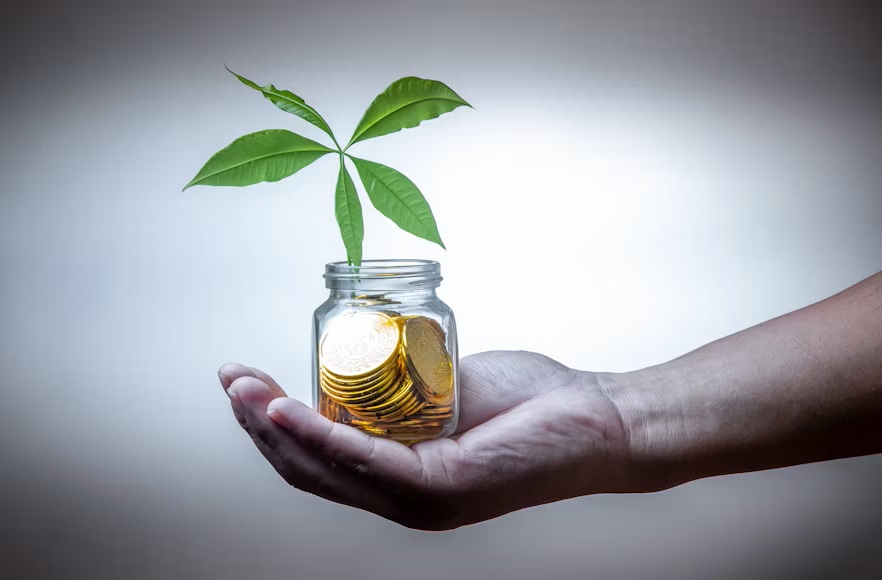
Ultimately, the savings account is a quiet rebellion against the noise of the financial world. It does not promise wealth in a week. It does not offer adrenaline. It offers something rarer: quiet growth, day by day, month by month. It respects the human need for security while rewarding patience.
I have watched friends lose sleep over a 2% dip in their portfolio, while I sleep easily knowing that six months of expenses sit in a liquid, insured account earning a decent return. That is not cowardice; it is strategy. The most successful investors—Warren Buffett included—keep massive cash reserves. Buffett’s Berkshire Hathaway held over $150 billion in cash and Treasury bills as of mid-2024 (see Berkshire’s Q2 2024 filing). If the world’s greatest investor uses cash for quiet growth, maybe there is wisdom in taking a second look at your savings account.
Conclusion: The Quiet Is Not Weakness
The next time someone dismisses a savings account as “old-fashioned,” remember this: Old-fashioned is just another word for proven. In a world of memecoins, margin calls, and 24-hour news cycles, the savings account is the reliable friend who never changes—but thanks to rising rates and digital competition, it now pays you back for loyalty. Check your current rate today. If it is below 4%, you are leaving money on the table. Open a HYSA in the next hour. Then watch, month by month, as the quiet growth quietly builds your financial freedom.
Sources for actuality links: FDIC, Bankrate, BLS, TreasuryDirect, Berkshire Hathaway SEC filings.