
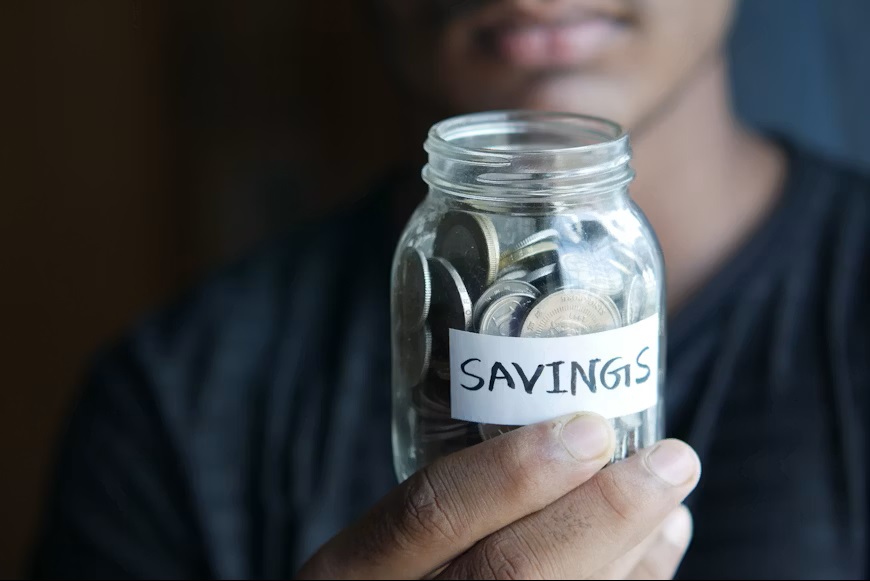
If you have ever read personal finance advice, you have likely encountered the golden rule: save three to six months of living expenses in an emergency fund. It is repeated by financial planners, bloggers, and even government agencies. But why three to six months? Is that number right for everyone? And how do you actually calculate it?
The 3- to 6-month rule is not arbitrary. It is based on historical data about job loss duration, household expenses, and financial resilience. However, the correct target for you depends on your personal circumstances—your job stability, your income sources, your family size, and your risk tolerance. This article will break down the rule in detail, help you calculate your precise number, and guide you on adjusting it for your unique situation.
What Is the 3- to 6-Month Rule?
The rule states that your emergency fund should contain enough cash to cover three to six months of essential living expenses. This is not your total income, nor your full paycheck—only the minimum amount you need to survive if your income stops.
Why three months? Statistically, the average duration of unemployment in the United States has fluctuated between 5 and 20 weeks over the past decade, depending on economic conditions. A three-month fund covers most short-term job losses or minor emergencies.
Why six months? For people with less stable income, higher expenses, or dependents, a six-month cushion provides a wider safety margin. During a recession or prolonged illness, six months can be the difference between staying afloat and falling into debt.
Actuality link: The U.S. Bureau of Labor Statistics reports the median duration of unemployment each month. Check their latest data to see current averages.
Why Not a Fixed Dollar Amount?
Some people ask: “Why not just save $10,000 or $20,000?” The problem is that a fixed dollar amount is arbitrary. A single person renting a small apartment in a low-cost city might only need $1,500 per month for essentials—meaning a $10,000 fund would cover over six months. But a family of four with a mortgage in a high-cost city might need $5,000 per month, making $10,000 only a two-month cushion.
The percentage-of-expenses approach is scalable and personal. It adjusts automatically to your cost of living, your family size, and your financial obligations.
Step 1: Calculate Your Essential Monthly Expenses
To apply the 3- to 6-month rule, you first need to know your essential expenses. These are the costs you cannot avoid, even if you lose your job. They typically include:
- Housing: Rent or mortgage payment (including property tax and insurance if escrowed)
- Utilities: Electricity, gas, water, internet, phone
- Food: Groceries and basic household supplies (not restaurant meals)
- Transportation: Car payment, gas, public transit, insurance
- Minimum debt payments: Credit card minimums, student loan payments, car loan, personal loans
- Healthcare: Insurance premiums, prescription co-pays
- Childcare or pet care: If essential for your ability to work
- Basic clothing and hygiene: Minimal budget for necessities
What to exclude:
- Dining out, entertainment, subscriptions (Netflix, gym), travel, shopping, gifts
- Extra debt payments beyond the minimum
- Savings contributions (retirement, college, vacation funds)
- Non-essential upgrades or luxuries
Example calculation:
| Category | Monthly Cost |
|———-|————–|
| Rent | $1,400 |
| Utilities | $250 |
| Groceries | $450 |
| Car payment | $350 |
| Gas & insurance | $200 |
| Minimum debt payments | $150 |
| Health insurance | $300 |
| Phone & internet | $120 |
| Total essentials | $3,220 |
Three-month target: $9,660
Six-month target: $19,320
Actuality link: The Consumer Financial Protection Bureau offers a free “Monthly Budget Worksheet” to help you track essential vs. discretionary spending.
Step 2: Assess Your Personal Risk Factors
Once you have your base number, adjust it up or down based on these key factors:
1. Job Stability
- Stable job (government, tenure-track, union, essential service): You may be comfortable with 3 months.
- Moderate stability (corporate, tech, small business): Aim for 4–5 months.
- Unstable or seasonal job, gig worker, freelancer, startup employee: Save toward 6 months or even 9 months.
- High-income but high-risk industry (e.g., sales on commission): 6 months is prudent.
2. Income Sources
- Single-income household: A job loss means total income loss. Aim for 6 months.
- Dual-income household: If both partners work, losing one income is less catastrophic. 3–4 months may suffice.
- Multiple income streams (side hustle, rental income, passive income): You may need less, but only if those streams are reliable.
3. Dependents and Family Size
- Single person with no dependents: Lower costs, fewer obligations. 3–4 months is often adequate.
- Married with children: Higher essential expenses (childcare, healthcare, food). 5–6 months is safer.
- Caring for elderly parents or special needs family members: 6 months minimum.
4. Health and Insurance
- High-deductible health plan: You may need extra cash to cover the deductible in a medical emergency. Add that amount to your target.
- Chronic health condition or regular medical costs: Increase your fund by 1–2 months of medical expenses.
- Good health and solid insurance: You can use the standard calculation.
5. Homeownership vs. Renting
- Homeowner: Expect major repairs (roof, HVAC, plumbing). Add a separate home maintenance fund of 1–2% of home value, or increase your emergency fund by 1–2 months of expenses.
- Renter: Lower risk of large unexpected expenses. Your emergency fund can be smaller.
6. Other Safety Nets
- Strong family support: If relatives could help with a loan or housing, you may need less.
- Access to unemployment benefits: In many states, unemployment replaces 40–50% of your previous income for up to 26 weeks. Factor this into your calculation: if you would receive $1,200/month in benefits, your emergency fund only needs to cover the remaining gap.
- Severance package: If your employer offers 1–3 months of severance, your fund can be smaller.
Actuality link: The Center on Budget and Policy Priorities provides state-by-state unemployment benefit data.
Step 3: Apply the Rule to Your Situation
Now combine your base expense number with your risk profile. Here are a few common scenarios:
Scenario A: Single, renter, stable job, good health, no dependents
- Base essential expenses: $2,500/month
- Target: 3 months = $7,500
Scenario B: Married, two children, homeowner, one primary income, moderate job stability
- Base essential expenses: $5,000/month
- Target: 6 months = $30,000
Scenario C: Freelancer, single, variable income, renter, high-deductible health plan
- Base essential expenses: $3,000/month
- Additional for HDHP: $3,000
- Target: 6 months of expenses + HDHP = $18,000 + $3,000 = $21,000
- Consider 9 months if income is very volatile: $27,000 + $3,000 = $30,000
Scenario D: Dual-income, no kids, both in stable jobs, moderate expenses, low-risk
- Base essential expenses: $4,000/month
- Target: 3 months = $12,000 (since loss of one income is only half the total)
Step 4: Adjust for Taxes and Reality
One nuance: when you lose your job, you may also lose employee benefits like health insurance. You might need to pay for COBRA or a private plan, which can cost $500–$1,500/month. Add that to your essential expenses.
Also, note that unemployment benefits are taxable. If you receive benefits, withhold taxes or set aside extra cash. Your emergency fund should cover the full gap, not just the amount after benefits.
Actuality link: Healthcare.gov explains COBRA coverage and costs.
Step 5: Start with a Mini Fund, Then Build to Full Target
For many beginners, saving $10,000–$30,000 feels impossible. That is why most experts recommend a phased approach:
- Phase 1: $500–$1,000 – Covers minor emergencies (car repair, small medical bill). Build this first.
- Phase 2: 1 month of expenses – Gives you breathing room for a short job gap or larger unexpected bill.
- Phase 3: 3 months – This is your real safety net. Most people can reach this within 12–24 months with consistent saving.
- Phase 4: 6 months (if appropriate) – Only pursue this if your risk profile warrants it. Many people stop at 3 months and redirect extra cash toward investing or debt.
Common Myths About the 3- to 6-Month Rule
Myth 1: “I only need 3 months because I have credit cards.”
Credit cards are not an emergency fund. They are debt. If you lose your job, you may not be able to pay the balance and will accrue high interest. Using a credit card in an emergency without a plan to repay it can lead to a debt spiral.
Myth 2: “6 months is too much. I can always find a job quickly.”
Even in a strong economy, job searches can take 2–4 months. In a recession, it can take 6–12 months. A 3-month fund may not be enough if you are competing with many other job seekers.
Myth 3: “I’m young and healthy. I don’t need an emergency fund.”
Young people often face the highest financial volatility: entry-level jobs, student loans, car breakdowns, and unexpected moves. Starting early builds the habit and protects against setbacks that could derail your career.
Myth 4: “I should invest my emergency fund to earn more.”
Your emergency fund is insurance, not an investment. It must be liquid, stable, and accessible within 24 hours. High-yield savings accounts or money market accounts are ideal. Avoid stocks, bonds, crypto, or long-term CDs.
Actuality link: The Financial Industry Regulatory Authority (FINRA) explains why emergency funds should not be invested.
How to Reach Your Target Faster
If your target seems daunting, use these strategies to accelerate savings:
- Automate a fixed amount each payday – Even $50 per week = $2,600/year.
- Save windfalls – Tax refunds, bonuses, gifts, and side hustle income go directly to the fund.
- Cut one recurring expense – Cancel unused subscriptions, negotiate insurance, or cook more at home.
- Start a temporary side hustle – Delivery driving, freelancing, or part-time work can add $200–$500 per month.
- Sell unused items – Decluttering can raise hundreds of dollars quickly.
Actuality link: The Pew Charitable Trusts found that automated savings significantly increase the likelihood of building emergency savings.
When to Recalculate Your Target
Your emergency fund target is not static. Revisit it at least once per year or whenever you experience a major life change:
- Job change (new salary, stability level)
- Marriage or divorce
- Birth of a child
- Buying or selling a home
- Major health diagnosis
- Significant increase or decrease in fixed expenses
- Retirement
If your expenses go up, increase your fund. If they go down, you can either keep the extra cushion or redirect it to other goals.
What If You Can Never Save 3 Months?
For people with very low income or high debt, saving 3 months of expenses may feel impossible. In that case, set a smaller goal: $1,000, then $2,000, then one month. Even a $500 buffer dramatically reduces financial stress.
The important thing is to start. The 3- to 6-month rule is an ideal, not a rigid law. Any emergency fund is better than none.
Actuality link: The Federal Reserve reports that nearly 40% of Americans would cover a $400 emergency with cash. Even a small fund puts you ahead of that statistic.
Conclusion: Your Number Is Personal
The 3- to 6-month rule is a powerful guideline, but it is not one-size-fits-all. The right amount for you depends on your essential expenses, your job stability, your family responsibilities, your health, and your risk tolerance. Calculate your base number, adjust for your personal factors, and start building today.
Remember: an emergency fund is not about fear—it is about freedom. With a solid safety net, you can take calculated risks, negotiate for better jobs, and handle life’s surprises without panic. That peace of mind is worth every dollar you save.
Additional Resources:
- FDIC: Building an Emergency Fund
- Consumer.gov: Emergency Savings
- NerdWallet: Emergency Fund Calculator